

Introduction
Have you ever opened a website on your laptop and everything looked perfect, but when you switched to your phone, the layout broke completely? Text became too small, buttons were hard to tap, and images did not fit the screen. This problem happens because many designs still depend heavily on fixed pixel values. Pixel-based layouts were useful in the past, but they struggle to adapt to today’s wide range of devices. This is where Pxless becomes important in modern design.
Pxless is a new and smarter approach that removes the strict dependency on pixels. Instead of locking elements into fixed sizes, Pxless allows layouts to adjust naturally based on screen size. This makes websites flexible, smooth, and easy to use across all devices. In today’s world, where people use phones, tablets, laptops, and even smart devices, Pxless plays a very important role. It helps designers build systems that work everywhere without breaking the user experience. That is why understanding Pxless is becoming essential for modern web design.
What Is Pxless?
Pxless is a modern design approach that avoids fixed pixel measurements and uses flexible units to create layouts that automatically adjust to different screen sizes. The word Pxless comes from “px,” which means pixels, and “less,” which means removing dependency. This makes designs more fluid, responsive, and adaptable across devices.
In simple terms, Pxless means building websites that do not rely on fixed sizes. Instead of using hard values like 200px, designers use flexible units like percentages or rem. This allows elements to resize based on the device being used. As a result, Pxless creates a smoother and more consistent experience for users. It focuses on flexibility, responsiveness, and better usability across all screens.
Why Pxless Is Important in Modern Web Design
Today, people use many different devices to access websites, including smartphones, tablets, laptops, and even smart TVs. Each device has a different screen size and resolution. If a website is built using fixed pixels, it may look perfect on one device but completely broken on another. This creates a poor user experience and can drive users away. Pxless solves this problem by allowing designs to adapt naturally to different screens.
Modern web design must focus on flexibility and adaptability. Pxless helps achieve this by removing rigid layouts and replacing them with fluid systems. This leads to better user interaction and smoother navigation. It also ensures that websites remain useful and attractive on any device. Better user experience, cross-device consistency, and future-proof design are the key reasons why Pxless is important today. As technology continues to grow, flexible design approaches like Pxless are becoming the standard rather than the exception.
History: From Pixel-Based Design to Pxless
In the early days of web design, most websites were built using fixed pixel layouts. Designers used exact pixel values to control the size and position of elements. This worked well when most users accessed the internet from desktop computers with similar screen sizes. However, as technology evolved, new devices with different screen sizes started to appear. This created problems for pixel-based designs.
Responsive design was introduced as a solution. It allowed websites to adjust layouts based on screen size using media queries. While responsive design improved flexibility, it still relied partly on pixel values. Pxless takes this idea further by completely removing dependency on pixels. It focuses on fluid systems that adapt automatically. This shift represents the next step in design evolution. Pxless builds on the lessons of the past while solving modern challenges, making it a natural progression in web development.
Core Principles of Pxless Design
Pxless design is built on a strong foundation of flexibility and adaptability. It focuses on creating layouts that can change based on the user’s device without losing structure or usability. Instead of fixed measurements, it uses scalable systems that respond to different environments. This makes designs more reliable and consistent across all platforms.
The core ideas behind Pxless include fluid layouts, relative units like %, em, rem, vw, vh, scalable typography, flexible grids, and consistency across devices. These principles work together to create a system that is both simple and powerful. By using these methods, designers can build interfaces that feel natural on any screen. Pxless is not just about removing pixels; it is about creating a better, more flexible design system that improves the overall user experience.
How Pxless Works in Real Life
In real-world use, Pxless works by allowing elements to resize and adjust automatically. Instead of setting fixed widths and heights, designers define relationships between elements. For example, a container might take up 80 percent of the screen instead of a fixed number of pixels. This allows the layout to adapt when the screen size changes.
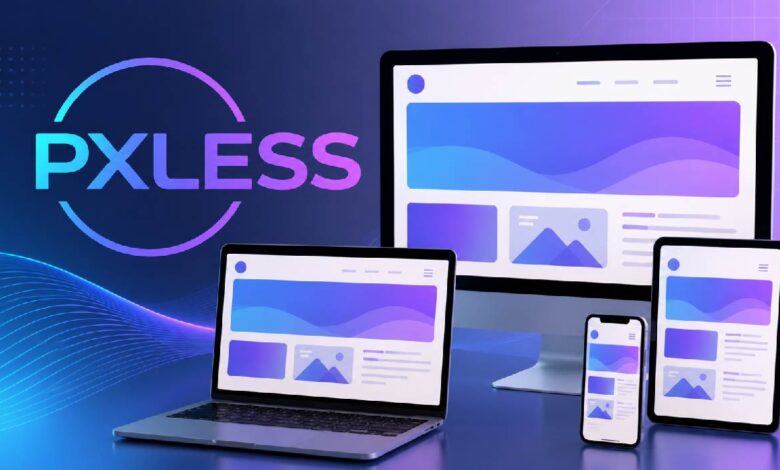
On a desktop, the design may appear wide and spacious, while on a tablet it becomes slightly compressed. On a mobile phone, it adjusts further to fit a smaller screen. This happens without breaking the layout. Text scales properly, images fit within their containers, and buttons remain easy to use. A real-life example is a navigation menu that changes from a full horizontal layout on desktop to a compact menu on mobile. This flexibility is what makes Pxless so effective in modern design.
Key Features of Pxless Design
Pxless design includes several important features that make it stand out. One of the main features is its ability to adapt to different devices without needing separate versions. This saves time and improves consistency. Another feature is automatic scaling, which ensures that elements adjust smoothly as the screen size changes.
It also focuses on clean user interface structures, making layouts simple and easy to understand. Lightweight code is another advantage, as Pxless reduces the need for complex fixes and adjustments. Accessibility support is also built into the system, allowing users with different needs to interact comfortably. These features make Pxless a strong choice for modern web development. It combines simplicity with advanced functionality, creating designs that are both efficient and user-friendly.
Benefits of Using Pxless
Using Pxless provides many benefits for both designers and users. One of the biggest advantages is improved user experience. Websites become easier to use, with smooth layouts that adjust naturally. Faster loading speed is another benefit, as simpler and more efficient code improves performance. This also leads to better SEO performance, as search engines prefer fast and mobile-friendly websites.
Maintenance becomes easier because there is no need to create multiple versions for different devices. Designers can manage a single flexible layout instead of several fixed ones. Flexibility, performance, and scalability are the main strengths of Pxless. These benefits make it a powerful approach for modern websites. As digital platforms continue to grow, Pxless offers a reliable and future-ready solution.
Pxless vs Pixel-Based Design
Pixel-based design uses fixed measurements, which means elements do not change unless manually adjusted. This makes layouts rigid and difficult to adapt. In contrast, Pxless uses flexible units that allow elements to resize automatically. This creates a more dynamic and responsive design system.
In pixel-based design, layouts are static and often break on smaller screens. Pxless, on the other hand, is dynamic and adapts smoothly to any device. Pixel-based systems often struggle with device compatibility, while Pxless ensures better adaptability. This difference makes Pxless more suitable for modern web environments. It provides a more reliable and user-friendly experience, especially in a world where users access content from many different devices.
Pxless vs Responsive Design
Many people think Pxless and responsive design are the same, but they are not exactly equal. Responsive design adjusts layouts based on screen size, often using media queries. However, it may still rely on pixel values in some cases. Pxless goes a step further by removing pixel dependency completely.
Responsive design focuses on adjusting layouts, while Pxless focuses on building flexible systems from the start. This makes Pxless more advanced and efficient. It reduces the need for constant adjustments and provides a smoother experience. By combining the strengths of responsive design with a pixel-free approach, Pxless creates a more modern and scalable solution for web development.
How to Implement Pxless in Web Design
Implementing Pxless starts with changing how you think about layout design. Instead of using fixed sizes, you begin using relative units. This allows elements to adjust based on their environment. Using tools like Flexbox and CSS Grid helps create flexible layouts that adapt easily.
Avoiding fixed widths is another important step. Designers should focus on scalable typography to ensure text remains readable on all devices. Media queries can still be used, but they should support flexibility rather than control it completely. By following these steps, designers can build layouts that are truly adaptive. Pxless implementation may take time to learn, but it provides long-term benefits that make it worth the effort.
Modern CSS Techniques for Pxless
Modern CSS provides powerful tools that support Pxless design. Flexbox allows elements to align and adjust within a container, making layouts more flexible. CSS Grid offers a structured way to create complex layouts that adapt to different screens. Functions like clamp(), min(), and max() help control sizes dynamically.
Container queries allow components to adjust based on their parent size, adding another layer of flexibility. These tools make it easier to create responsive and scalable designs without relying on fixed pixels. By using modern CSS techniques, developers can fully embrace Pxless design and build interfaces that are both efficient and adaptable.
Practical Examples of Pxless Design
A simple example of Pxless design is scalable typography. Instead of setting font size in pixels, designers use rem or em units. This allows text to adjust based on screen size and user settings. Another example is fluid images, which scale within their containers without breaking the layout.
Flexible buttons also show how Pxless works. Instead of fixed widths, buttons expand based on content and screen size. Layouts built with Grid or Flexbox adjust automatically, ensuring consistency across devices. These examples show how Pxless solves real design problems. It makes interfaces more adaptable and improves the overall user experience.
Accessibility and User Experience in Pxless
Pxless design improves accessibility by making layouts more flexible and user-friendly. Text can scale easily, making it readable for users with different needs. Zoom-friendly designs ensure that content remains usable even when enlarged. This is important for users with visual impairments.
Inclusive design is easier to achieve with Pxless. Elements adjust naturally, reducing the risk of broken layouts. This creates a smoother experience for everyone. By focusing on adaptability, Pxless supports better user interaction and accessibility. It ensures that websites are usable by a wider audience, which is a key goal in modern design.
Performance and SEO Benefits of Pxless
Pxless design improves performance by reducing unnecessary code and making layouts more efficient. Faster loading times lead to better user experience and lower bounce rates. Search engines prefer websites that load quickly and work well on mobile devices.
Mobile-friendly design is a major ranking factor, and Pxless supports this naturally. Better structure and readability also help search engines understand content more easily. This improves indexing and visibility. By using Pxless, developers can create websites that perform better and rank higher in search results.
Challenges of Pxless Design
Despite its advantages, Pxless design comes with some challenges. There is a learning curve for developers who are used to pixel-based systems. Understanding relative units and flexible layouts requires practice. Testing across devices can also be more complex.
Legacy systems that rely on fixed pixels may be difficult to convert. Proper planning is needed to avoid layout issues. However, these challenges are manageable with experience. The long-term benefits of Pxless often outweigh the initial difficulties. With time, it becomes easier to implement and maintain.
Where Pxless Is Used Today
Pxless is used in many areas of modern technology. Websites are the most common example, but it is also used in mobile apps and software platforms. SaaS products benefit from Pxless because they need to work across different devices.
IoT devices and future technologies also require flexible design systems. As new devices continue to appear, Pxless becomes even more important. It provides a consistent experience across all platforms. This makes it a valuable approach for developers and designers.
Future of Pxless Design
The future of Pxless looks very promising. As technology continues to evolve, the need for flexible design will increase. AI and adaptive interfaces will rely on systems that can adjust automatically. Pxless fits perfectly into this future.
New frameworks and tools are being developed to support Pxless principles. This will make it easier to implement and improve efficiency. As more designers adopt this approach, it will become a standard in web development. Pxless is not just a trend; it is a long-term solution for modern design challenges.
Why Pxless Is the Future of Web Design
Pxless represents a shift toward more flexible and user-focused design. It solves many problems caused by fixed layouts and improves the overall experience. By focusing on adaptability, it ensures that websites work well on any device.
It also supports better performance, accessibility, and scalability. These benefits make Pxless a strong choice for future development. As digital environments continue to change, Pxless provides a stable and reliable approach. It is becoming the new standard for modern web design.
Conclusion
Pxless is a powerful approach that changes how websites are designed. By removing fixed pixel dependency, it creates flexible layouts that adapt to different devices. This improves usability, performance, and accessibility. It also supports better SEO and long-term maintenance.
In a world where users access content from many devices, flexibility is essential. Pxless provides this flexibility while maintaining simplicity and efficiency. It is a smart solution for modern design challenges. By adopting Pxless, developers can build better digital experiences that are ready for the future.
For More Information Visit Techmagazinely